

Discover how blood work can reveal stress indicators through various biomarkers, offering insights into your body's response to stress and overall health.
Stress is more than a feeling. When the body responds to stress, it activates hormones and other biological processes that can affect the immune system, metabolism, blood sugar, thyroid function, and more.
Some of these changes may show up in blood work. While no single lab result can prove someone is under stress, looking at several biomarkers together may provide useful clues about how stress affects the body.
During a stressful situation, the body quickly shifts into action. Stress hormones help mobilize energy and prepare the body to respond. When stress continues over time, these same systems may remain altered or become less well regulated.
This means stress-related changes can appear across several areas of blood chemistry. Potential clues include:
Stress hormones: Cortisol, DHEA, ACTH, and catecholamines such as epinephrine and norepinephrine are involved in the body's stress response.
Immune and inflammatory markers: Stress can affect white blood cells and inflammatory signals such as IL-6.
Blood sugar and insulin: Acute stress can temporarily raise blood glucose, while ongoing stress may contribute to changes in insulin sensitivity and glucose regulation.
Cholesterol and triglycerides: Both short- and long-term stress have been associated with changes in blood lipids.
Thyroid and reproductive hormones: Stress can influence the systems that regulate thyroid and reproductive hormones, although responses can vary considerably.
Oxidative stress markers: Prolonged stress may contribute to oxidative stress, which occurs when the balance between reactive molecules and the body's antioxidant defenses is disrupted.

The body's response to a sudden stressor is not necessarily the same as its response to ongoing stress.
For example, cortisol typically rises during acute psychological stress. Other hormones and inflammatory markers may also change as the body responds to an immediate challenge. With chronic stress, however, biomarker patterns can be more variable. Some markers may remain elevated, decline, or change in regulation over time.
This is one reason a single laboratory value provides only limited information about stress.
Stress affects interconnected systems versus one isolated pathway. A change in glucose, cortisol, cholesterol, or an inflammatory marker can also have many causes unrelated to stress.
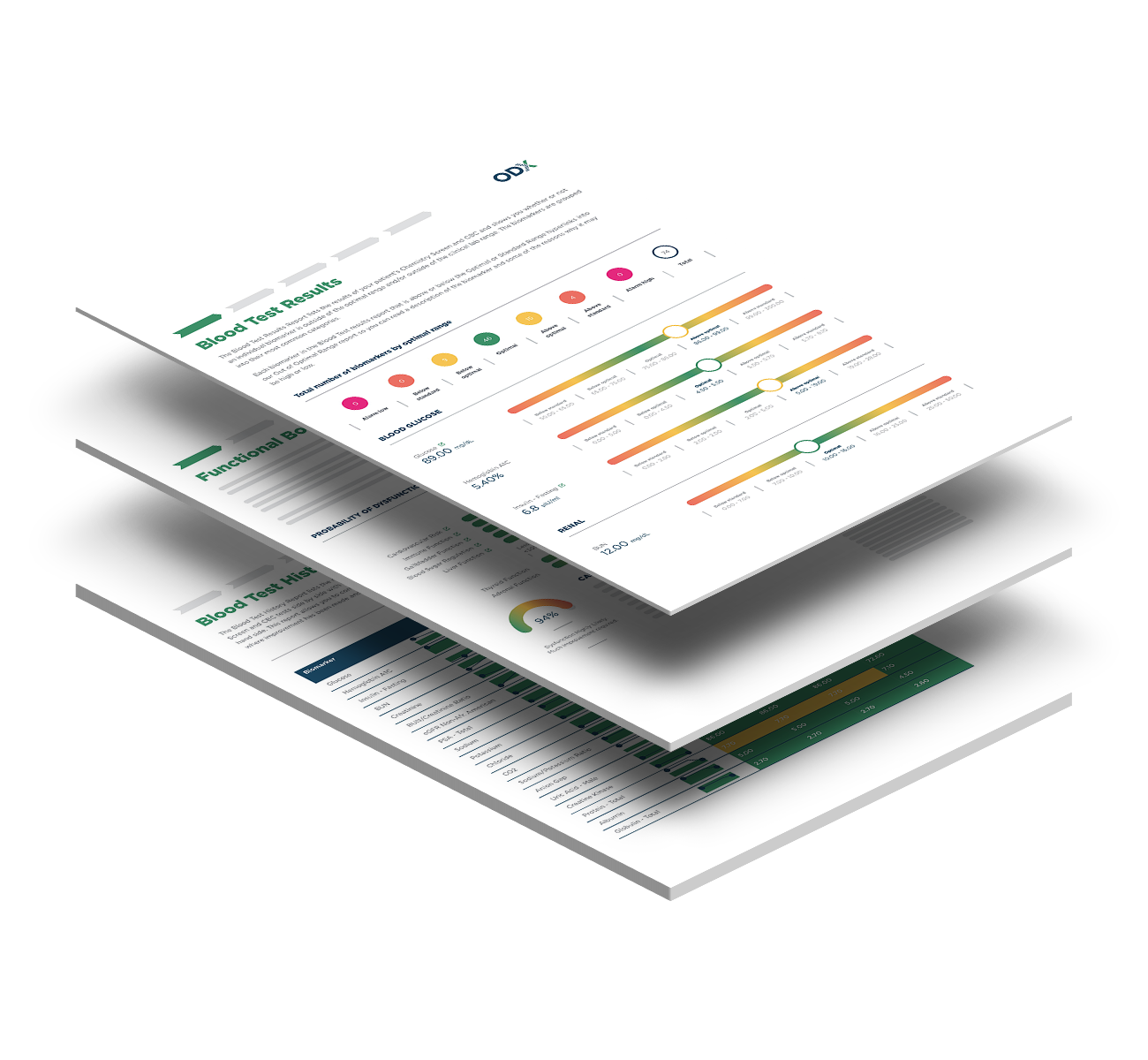
Looking at multiple biomarkers—and how they change over time—can provide a broader picture. The ODX Functional Health Report organizes blood-test results by physiological system and compares current and previous results, making it easier to identify patterns across different areas of health.
Cortisol may be the best-known stress biomarker, but the body's response to stress extends far beyond it. Blood sugar, immune activity, lipids, hormones, and oxidative balance may all provide additional clues.
Rather than using any one result as a "stress test," examining these biomarkers together can help reveal the broader physiological patterns that may accompany acute or chronic stress.
CLICK HERE to learn more about Stress Biomarker Patterns