


Chronic stress impacts blood sugar regulation and immune function, leading to potential health issues detectable through routine blood tests. Discover how stress affects your body.
Stress doesn't just affect how you feel. When stress continues over time, it can cause changes throughout the body, including changes in immune function and blood sugar regulation.
Some of these effects may even show up in routine blood tests.
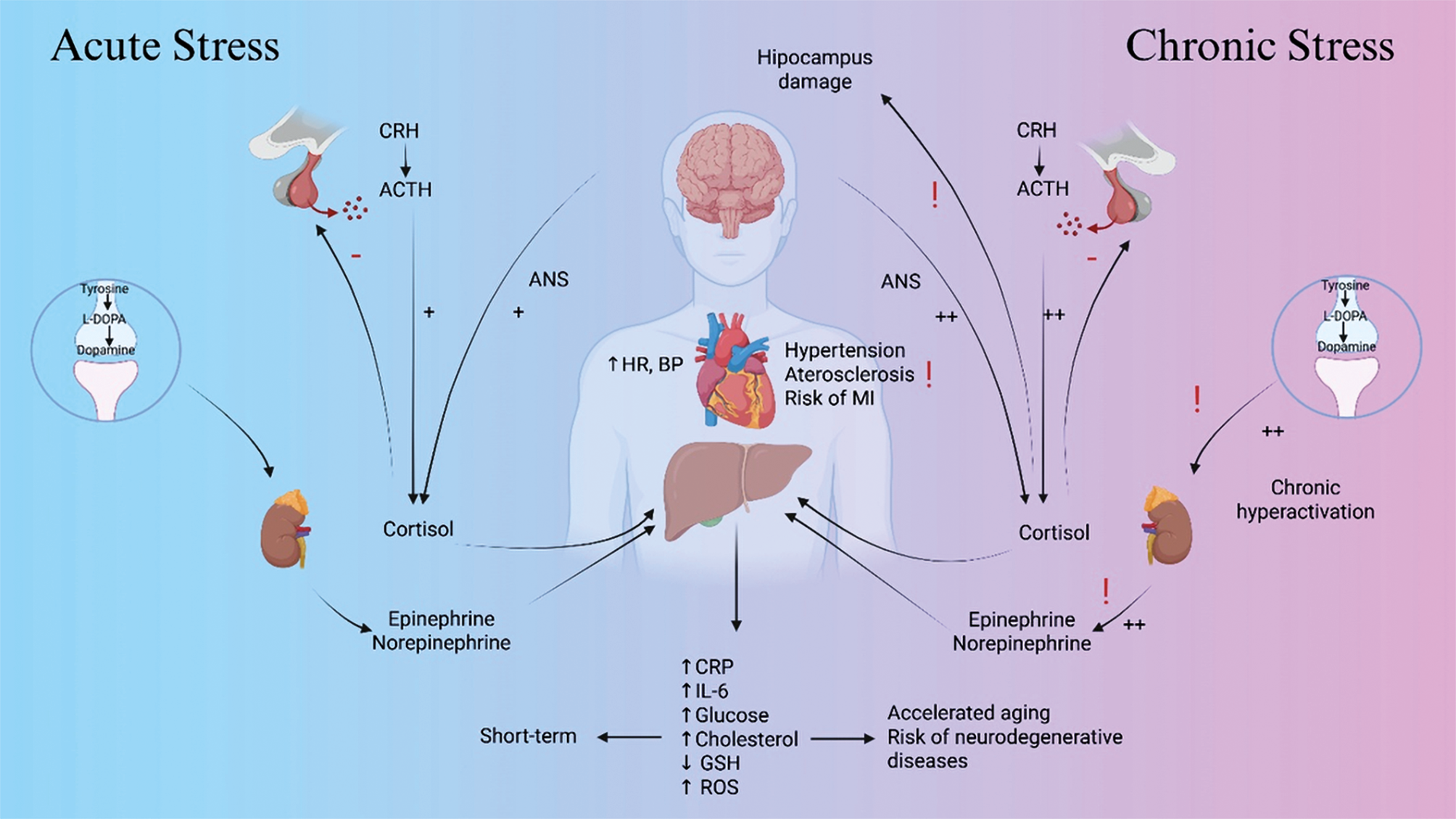
Image: Shkvarok-Lisovenko, Anastasiia, and Yevheniia Bushman. "Laboratory markers of chronic and acute stress: Diagnostic value and clinical implications (Part 1: Pathophysiology of acute and chronic stress in the context of its influence on cardiovascular system)." The Ukrainian Scientific Medical Youth Journal 157.3 (2025): 64-71. Creative Commons Attribution 4.0 International
Short-term stress generally lasts from minutes to hours. This type of stress can temporarily strengthen some parts of the immune response.
Chronic stress is different. It may continue for hours each day over weeks or months. Over time, continued activation of the body's stress response can negatively affect physical and mental health.
During stress, the body releases hormones such as cortisol and catecholamines. When these signals remain elevated for long periods, they can change how the immune system functions.
High levels of glucocorticoids, such as cortisol, can reduce the number and activity of certain immune cells, particularly lymphocytes. Prolonged exposure to catecholamines, such as dopamine and epinephrine, can also interfere with immune cell activation and growth.
Stress-related glucocorticoid activity may also contribute to lower levels of circulating eosinophils, another type of white blood cell. However, evidence that chronic psychological stress consistently causes low eosinophils in humans remains limited.
Stress also affects how the body manages glucose.
Cortisol helps make more energy available during stressful situations by increasing glucose production. It can also make it harder for muscle and fat cells to take glucose out of the bloodstream.
Over time, these changes may contribute to glucose regulation problems and insulin resistance. Chronic stress has been associated with changes in fasting glucose, glucose tolerance, insulin resistance, and HbA1c.
Routine lab tests may provide clues about how stress affects the body. Changes in lymphocytes and eosinophils can provide information about immune function, while fasting glucose, HbA1c, glucose tolerance testing, and measures of insulin resistance can offer insight into glucose regulation.
Rather than relying on a single result, patterns among these biomarkers may help provide a broader picture of the body's physiological response to stress.
CLICK HERE to learn more about Stress Patterns in CBC and Glucose Markers