As we move into a new year, we wanted to take a moment to reflect on what has been built at Optimal DX over the past year and where we are headed next.2025 was a year of meaningful growth and continued refinement of our core mission: helping healthcare practitioners move beyond conventional lab interpretation and into deeper, clinically relevant insight through Functional Blood Chemistry Analysis.
Much of what we build at Optimal DX happens quietly. New tools roll out, reports improve, workflows become smoother, and analytical depth increases. Over time, these improvements simply become how the platform works. This reflection is an opportunity to step back and acknowledge the progress made together.
A New Members-Only Resource Center
In May, we launched a fully redesigned Resource Center inside the platform. This members-only area was built to serve as a centralized clinical knowledge hub, bringing together research-driven content and practical tools practitioners can rely on.
The Resource Center now includes:
- In-depth research articles
- Clinical downloads and guides
- AMA-style questions and answers
- Calculators and unit conversions
- Continuously updated digital reference guides
This space continues to grow and reflects our commitment to making Optimal DX not just a reporting platform, but a clinical education ecosystem.
Expanded Lab Data Import and PDF Parsing
Data entry friction remains one of the biggest barriers to consistent blood chemistry analysis. This year, we significantly expanded our PDF parsing capabilities.
Optimal DX now supports direct data extraction from original lab PDFs from over 140 laboratories across 27 countries. This improvement reduces manual entry, minimizes transcription errors, and makes the platform more accessible for practitioners working with international labs.
Introducing the Spotlight Series
This year, we launched Spotlight, a new series of in-depth clinical articles designed to explore biomarkers, functional patterns, and treatment considerations in a focused, system-oriented way.
Spotlight topics published this year included:
Each Spotlight article is written to bridge clinical research with practical application, helping practitioners think more deeply about patterns rather than isolated lab values.
Designs for Health Virtual Dispensary Integration
We released a full integration with Designs for Health and their Virtual Dispensary, allowing practitioners to:
- Build DFH-specific treatment plans inside Optimal DX
- Generate unique eScript links
- Send patients directly to DFH for fulfillment
This integration supports streamlined clinical workflows while maintaining practitioner control over recommendations and plan structure.
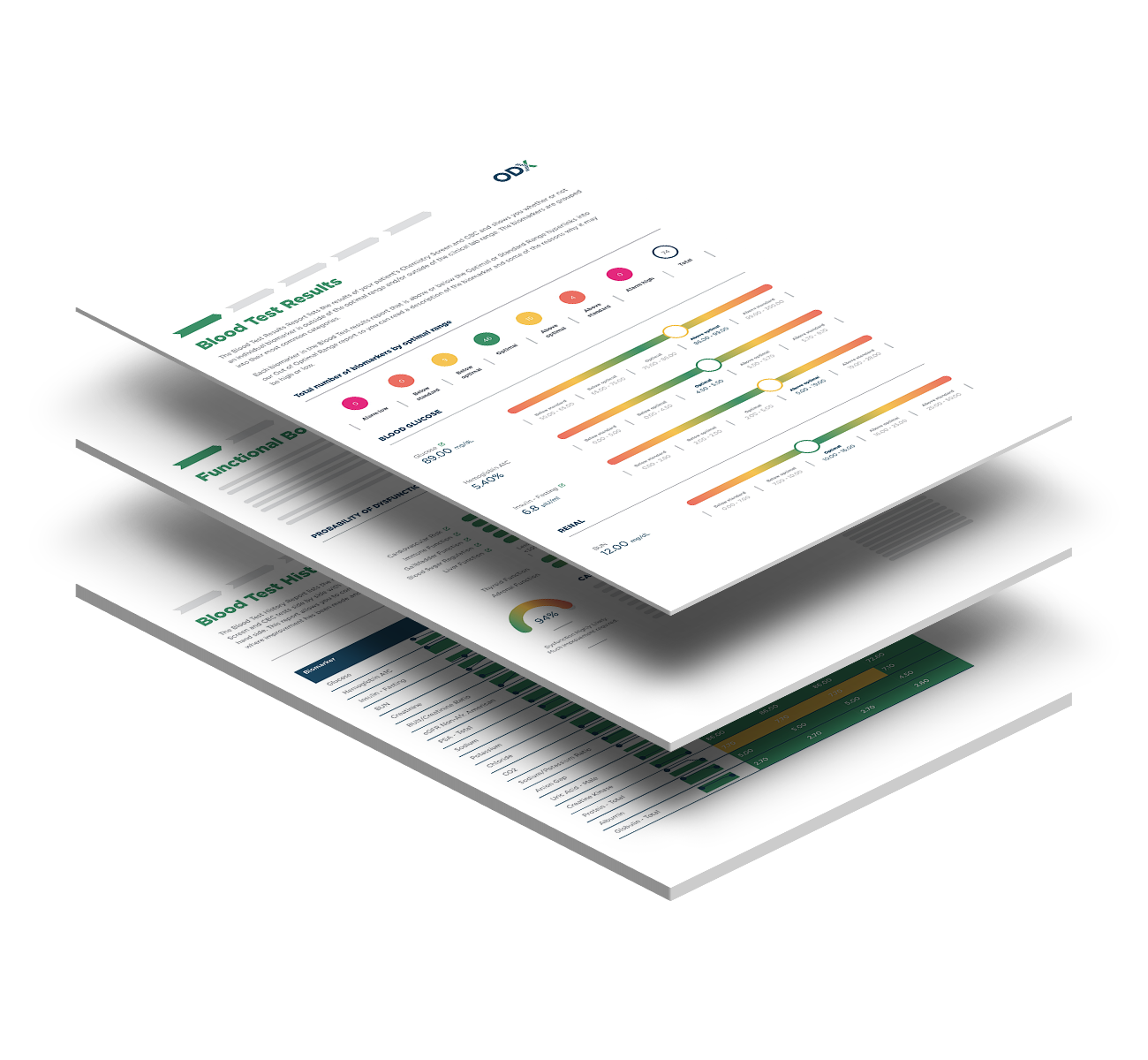
Enhancements to the Functional Health Report
The Functional Health Report (FHR) remains the cornerstone of the Optimal DX platform. This year, we overhauled key areas of the report to improve clarity, usability, and clinical relevance.
We also added additional configuration options, giving practitioners greater flexibility to customize the FHR based on their practice style, patient population, and clinical philosophy.
If you would like a closer look at the improvements, you can read the full overview here: Introducing our new, improved Functional Health Report (FHR) .
Continued Expansion of Our Biomarker Library
Optimal DX now supports over 290 blood biomarkers. Each biomarker is supported by clinical research and detailed interpretation available through:
This growing library reflects our long-standing commitment to depth, context, and evidence-based interpretation.
Built with Practitioner Feedback
Every improvement made this year was informed by real-world practitioner use. Questions, suggestions, and feedback directly shape the evolution of the platform.
Optimal DX is not built in isolation. It is built alongside the clinicians who use it daily.
Looking Ahead to 2026
As we move into 2026, our focus is on going even deeper. We are working toward:
- More advanced, system-specific reports
- Refined indices and calculated insights
- Tools that extend beyond the Functional Health Report to support more nuanced clinical interpretation
We are grateful to be building this platform with a community of thoughtful, engaged practitioners and look forward to what lies ahead.