

Discover how adrenal glands regulate electrolytes like sodium and potassium, impacting fluid balance, blood pressure, and overall health in this informative blog post.
Electrolytes are minerals that help keep many basic body processes running normally. They help regulate fluid and pH balance and support the electrical signals that regulate nerve and muscle function.
Sodium and potassium are two primary electrolytes. Their levels are closely controlled, and the kidneys play an important role in maintaining balance between them.
The adrenal glands also have a hand in this process.
The adrenal glands produce a hormone called aldosterone. It is the body's main mineralocorticoid hormone.
Aldosterone acts on the kidneys. It tells them to retain sodium and excrete more potassium in the urine. Water follows sodium, so this process also affects blood volume and blood pressure due to sodium and water retention
Several factors can increase aldosterone release. These include low blood volume, high potassium, low sodium, and stress-related hormone activity.
Sodium helps regulate fluid levels and normal cell function.
Low blood sodium is the most common electrolyte disorder. Symptoms may include headache, nausea, confusion, and delirium. Low blood sodium levels trigger the release of aldosterone to help the body retain sodium and prevent further low sodium.
Potassium supports muscle contraction, nerve signals, heart rate, blood pressure, and normal cell function.
Aldosterone helps regulate potassium by increasing the amount the kidneys remove from the body. Low potassium is associated with excess aldosterone and Cushing syndrome. High potassium may occur when aldosterone levels are too low.
Potassium levels can also be affected by kidney function, dehydration, sweating, medications, and stress.
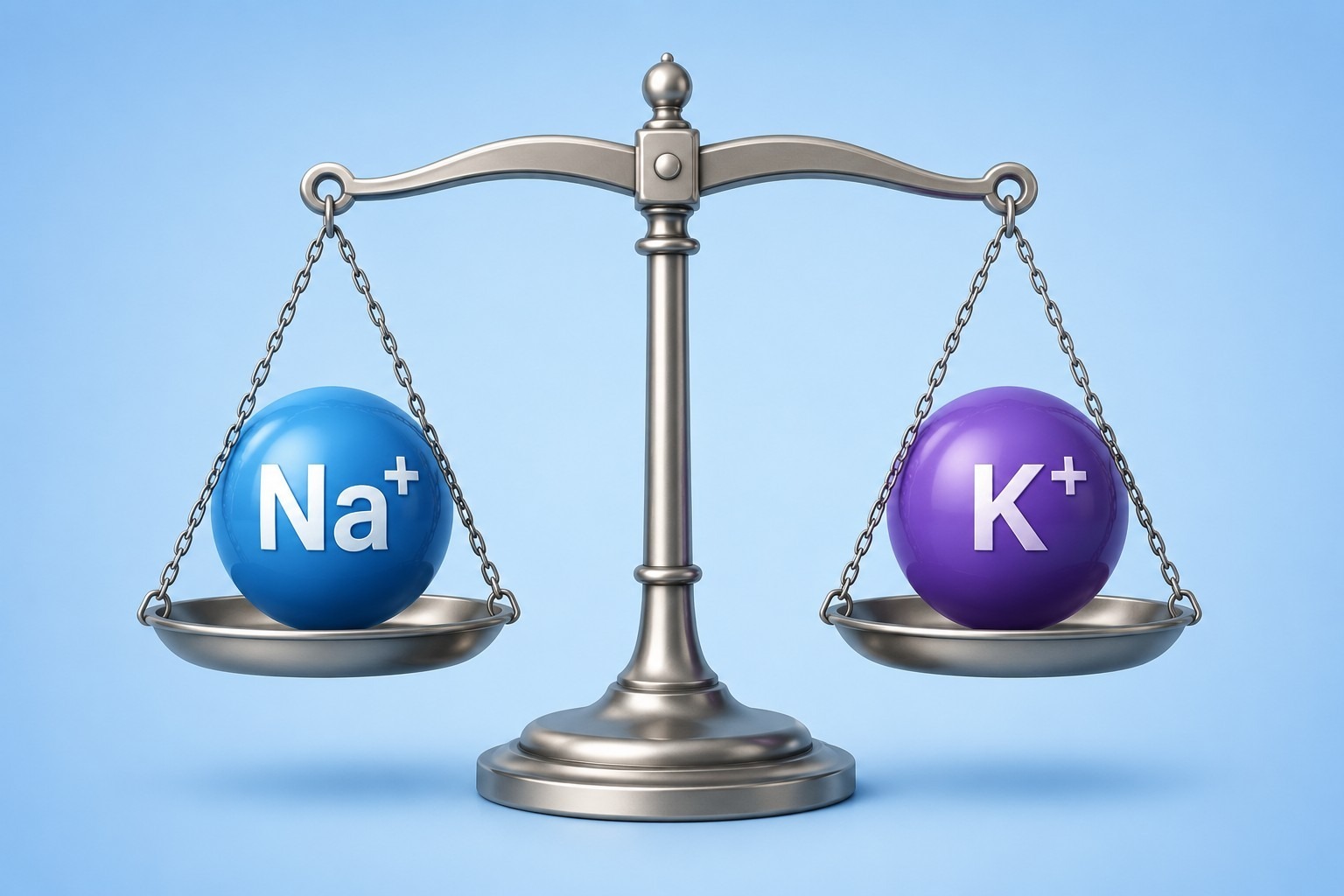
Blood test results can also be used to calculate the sodium-to-potassium (Na/K) ratio. This ratio offers another way to view the relationship between the two electrolytes.
The Na/K ratio has been used as a marker of stress-response physiology. However, it is not specific to one condition. Hydration, diet, kidney function, blood pressure, and other factors can influence the results.
Significant or ongoing abnormalities may signal conditions involving the kidneys, adrenal glands, or mineralocorticoid hormones.
CLICK HERE to learn more about Adrenal function and electrolytes.