

Discover the link between salt and blood pressure, learn how sodium and potassium balance impacts your health, and find tips for managing salt-sensitive hypertension.
Salt-sensitive hypertension occurs when blood pressure rises more than expected in response to salt. It may account for a large share of hypertension cases and can also occur in some people with otherwise normal blood pressure.
Risk is higher in older adults, women, individuals of African descent, and those with obesity, metabolic syndrome, or certain genetic traits.
Too much sodium can promote fluid retention, oxidative stress, blood vessel inflammation, impaired nitric oxide signaling, and reduced kidney sodium excretion.
These changes can increase blood volume, cardiac output, and vascular resistance, making blood pressure harder to regulate.
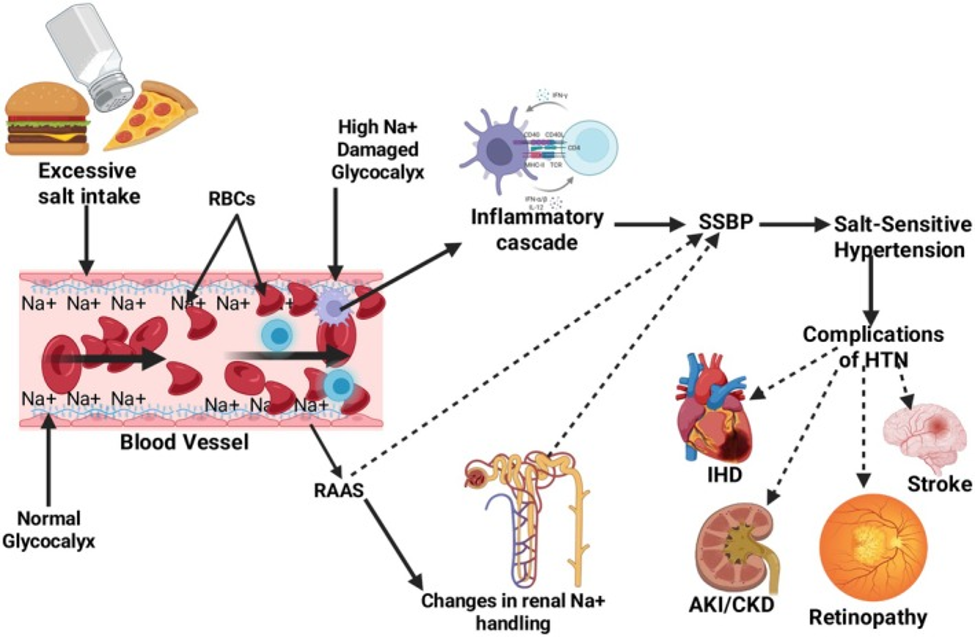
Source: Siakabanze, Chileleko et al. “Integrated mechanisms linking sodium-potassium imbalance to salt-sensitive hypertension.” Physiological reports vol. 13,24 (2025): e70715. doi:10.14814/phy2.70715 http://creativecommons.org/licenses/by/4.0/
Potassium helps counterbalance sodium. It supports sodium excretion through the kidneys, improves blood vessel relaxation, supports nitric oxide availability, reduces oxidative stress, and helps regulate vascular tone.
A healthier sodium-to-potassium balance with less sodium and more potassium from fruits, vegetables, and dairy foods may help reduce salt-sensitive blood pressure changes.
CLICK HERE to learn more about Salt-sensitive hypertension, health consequences, etc.