

Boost your health with fibermaxxing by increasing fiber intake through simple food swaps and strategies for better digestion and overall wellness.
"Fibermaxxing" is a popular trend that encourages people to increase the fiber content of their meals and snacks. While the name may be new, the idea is simple: eat more fiber-rich foods to support better health.
Many people fall short of recommended fiber intake. Adults should aim for 25-29 g daily, with intakes greater than 30 g a day being even more beneficial.
You can also calculate your own minimum fiber needs by multiplying 14 grams per 1,000 calories you require daily; e.g., for a 2,000-calorie-per-day intake, 2,000 x 14 = at least 28 grams of fiber daily.
Fiber plays an important role in overall health. Research has linked higher fiber intake with:
Higher fiber intake is also associated with lower overall mortality and better long-term metabolic health.
There are two main types of fiber:
Soluble fiber dissolves in water and forms a gel-like substance. It is found in foods such as oats, beans, lentils, apples, berries, and carrots.
Insoluble fiber does not dissolve in water and helps move material through the digestive tract. It is found in whole grains, nuts, seeds, leafy greens, and many fruits and vegetables.
Eating a variety of plant foods helps ensure you get both types.
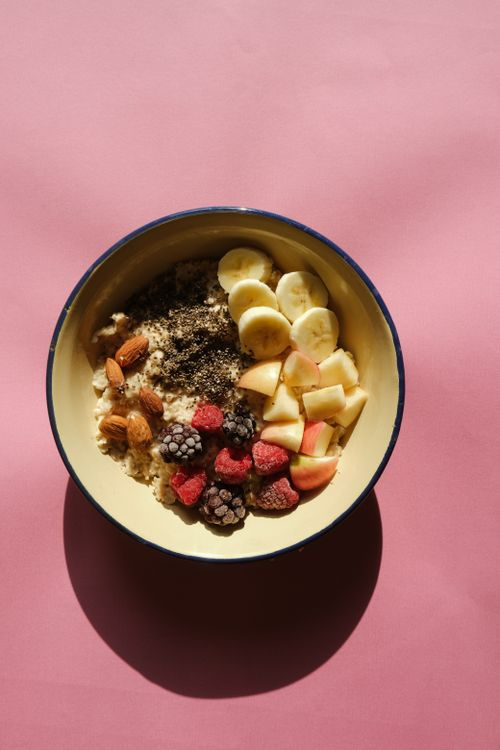
Adding fiber does not have to be complicated. Try these simple strategies:
More fiber is beneficial, but adding too much too quickly can cause gas, bloating, or cramping. To make the transition easier, increase fiber gradually over time, drink plenty of water, and include a balance of soluble and insoluble fibers.
Improving fiber intake does not require a complete diet overhaul. Simple swaps—such as choosing fruit instead of chips or whole grains instead of refined grains—can make a meaningful difference over time.
Consistently choosing more whole, fiber-rich foods is one of the simplest ways to support long-term health.
CLICK HERE to learn more about Fiber, FODMAPs, and health effects and benefits