



Rheumatoid arthritis (RA) is a systemic inflammatory autoimmune disorder characterized by progressive joint cartilage and bone destruction, oxidative stress, lipid peroxidation, DNA damage, and compromised antioxidant systems.
Although RA has a significant genetic component, environmental factors affect the extent and severity of disease, a process that begins years before clinical manifestation. Factors that promote or worsen RA may be especially significant in those genetically susceptible.
Potential promoting factors:
- Air pollution
- Cigarette smoking
- Coffee, four or more cups/day, especially unfiltered coffee
- Decaffeinated coffee solvent
- Dust
- Dysbiosis, e.g.,
- Increased Colinsella, Prevotella copri (TMAO producer)
- Decreased Faecalibacterium, Bifidobacterium, and Bacteroides
- Gluten
- Infections
- Metabolic syndrome
- Muscle loss
- Obesity, high waist circumference
- Sarcopenic obesity
- Sugar-sweetened or high-fructose-sweetened beverages
- TMAO produced from choline and carnitine by GI bacteria
- Tomatoes, potatoes, and eggplant in sensitive individuals
- Western-style diet
- Excess calorie intake
- Low ratio of omega-3 to omega-6 foods
- Low fiber
- Microbiota imbalances
- Omega-6:Omega-3 dietary ratio 10-20:1
- Red meat
- Refined carbohydrates
- Excess salt
- Saturated fats from animals
- Trans fats
Role of diet in rheumatoid arthritis (RA) pathogenesis
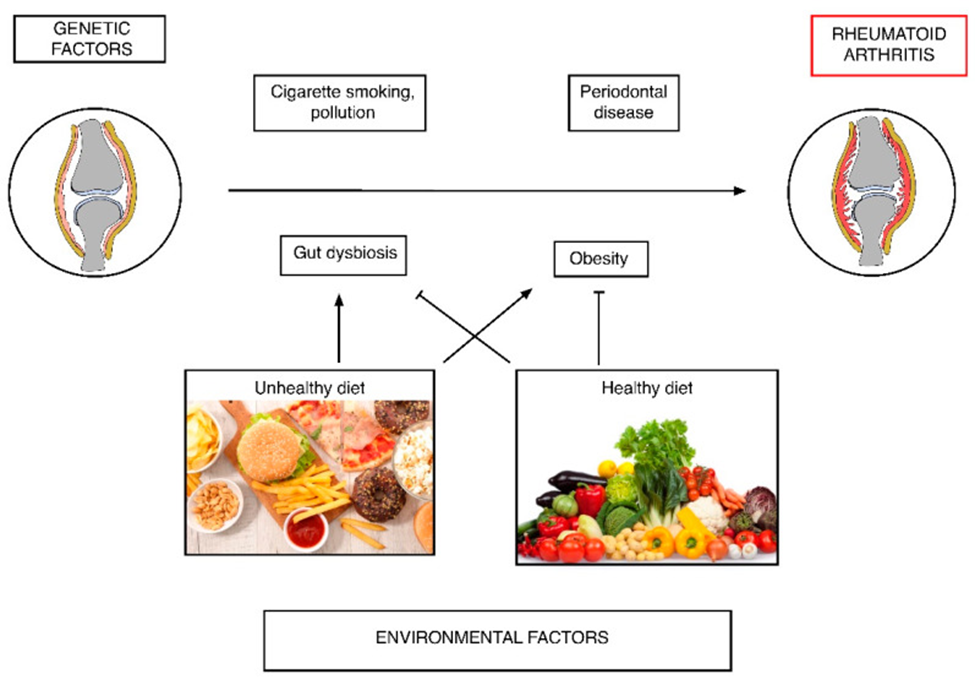
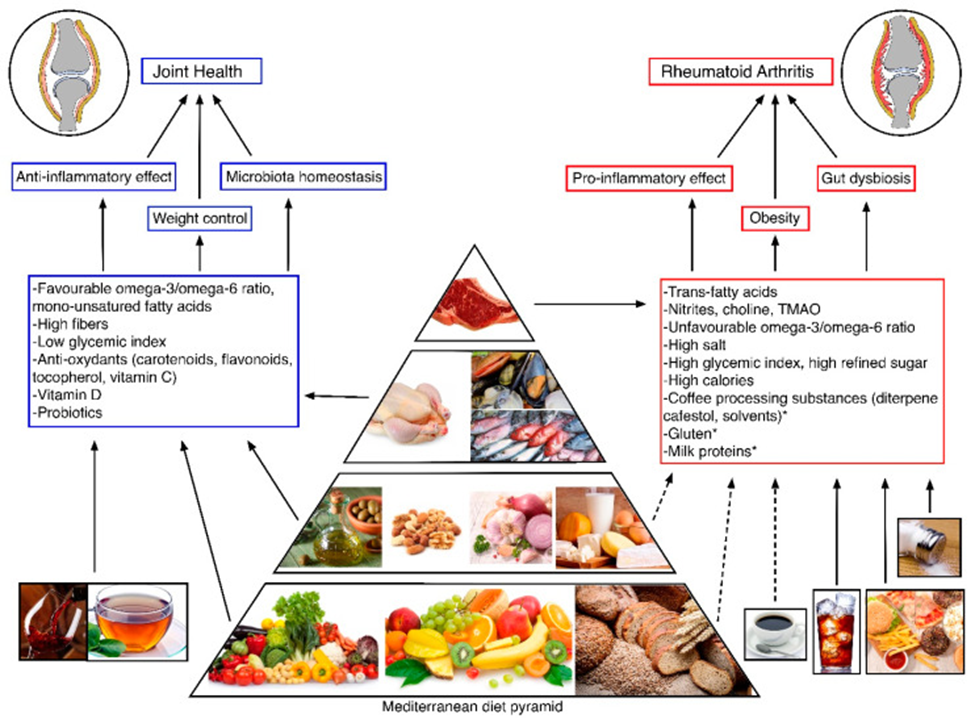
Potential Protective Factors:
- Black tea, green tea
- Calorie restriction
- Healthy oils
- Exercise and regular physical activity
- Fatty fish, e.g., sardines, salmon, seabream, seabass, and trout, 1-2 times/week along with other fish intake
- Fiber
- Fruits and vegetables, five or more servings per day, preferably seasonal and local
- Maintaining a healthy weight and body composition
- Mediterranean diet
- Extra-virgin olive oil
- Fish
- Fruit
- Herbs and spices
- Legumes
- Low consumption of red meat and refined sugar
- Moderate intake of eggs, poultry, and dairy
- Red wine in moderation
- Unrefined cereals
- Vegetables
- Omega-3 fatty acids EPA and DHA, at least 210 mg/day
- Omega-6:Omega-3 dietary ratio of 1-4:1
- Vegetarian diet
- Vitamin D sufficiency
Nutrients and their food sources involved in the development and progression of Rheumatoid Arthritis
Optimal Takeaways
- Rheumatoid arthritis is an inflammatory disease
- A healthy anti-inflammatory diet based on the Mediterranean diet or a vegetarian diet can help reduce inflammation and symptomatology
- Consume an abundance of fruits, vegetables, fiber, fatty fish/omega-3s, extra-virgin olive oil, tea, and antioxidants
- Maintain a healthy gut microbiota
- Consume a 1-4:1 ratio of omega-6s to omega-3s
- Maintain a healthy weight and muscle mass
- Avoid pollution, smoking, trans fats, highly processed foods, gluten, and sweetened beverages
- Limit intake of red meat, refined carbohydrates, and coffee

Reference
Gioia, Chiara et al. “Dietary Habits and Nutrition in Rheumatoid Arthritis: Can Diet Influence Disease Development and Clinical Manifestations?.” Nutrients vol. 12,5 1456. 18 May. 2020, doi:10.3390/nu12051456 This article is an open access article distributed under the terms and conditions of the Creative Commons Attribution (CC BY) license (http://creativecommons.org/licenses/by/4.0/).


