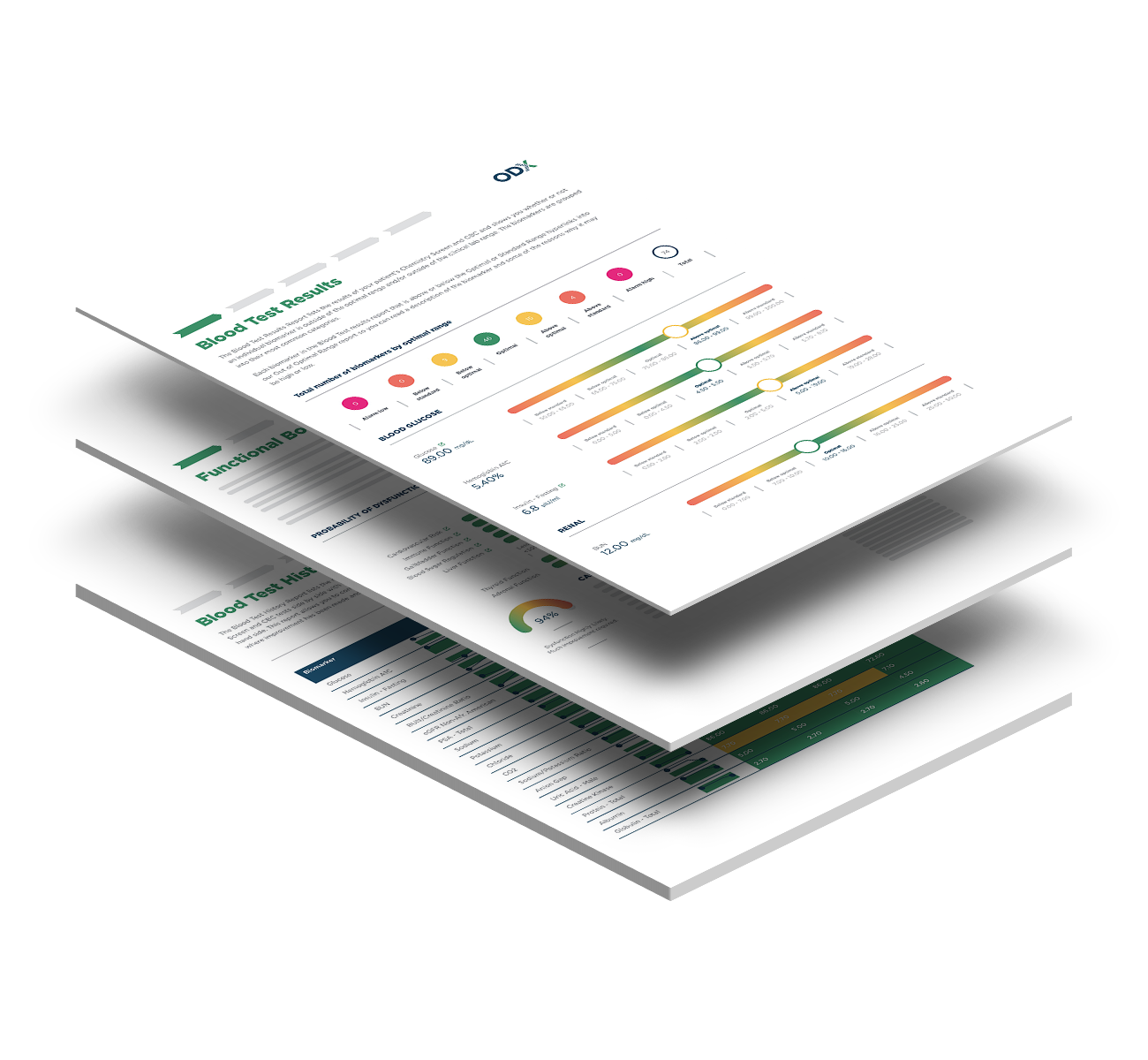


Discover how complete blood count (CBC) ratios can indicate inflammation levels in colorectal cancer patients, impacting survival predictions and health insights.
A routine blood test called a complete blood count (CBC) counts the different cells in your blood. From those counts, you can work out a few simple ratios that hint at how much inflammation is going on in the body.
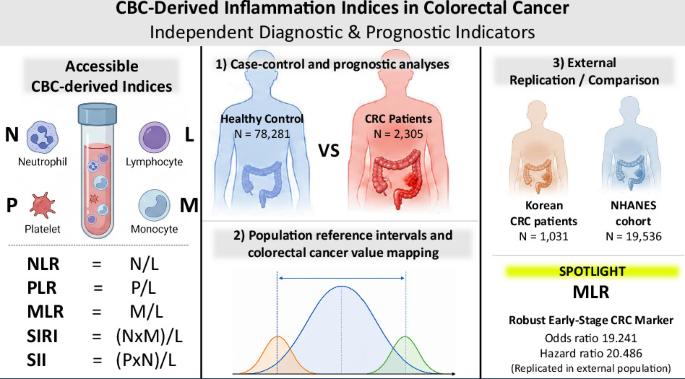
A new study from Korea looked at five of these ratios in people with colorectal cancer. It compared about 2,300 patients with about 78,000 healthy adults, then checked the results in a second group of about 1,000 patients.
Each ratio compares one type of blood cell with lymphocytes, the white blood cells that help your immune system target specific threats.
These ratios can't screen for cancer. A "normal" result doesn't rule out cancer, and a high result doesn't mean you have it. Colonoscopy and stool tests are still the way to screen.
There's no single "ideal" number. Healthy ranges differed between Korean and US adults, especially for MLR and SIRI. The right range depends on the population and the lab doing the test.
If your results show higher inflammation, talk with your doctor about what it means for you.
Choe, Eun Kyung, et al. "Complete blood count-derived inflammation indices in colorectal cancer: head-to-head case-control and prognostic analyses with population reference intervals and external replication." British Journal of Cancer (2026): 1-11. http://creativecommons.org/licenses/by/4.0/
CLICK HERE to learn more about CBC and inflammation in colorectal cancer.