

Discover how thyroid health is linked to gut health, immune function, and nutrition status. Learn to interpret thyroid antibody tests effectively.
Thyroid antibody tests provide different information than standard thyroid hormone tests.
Tests such as TSH, free T4, and free T3 show how well the thyroid is currently producing and regulating hormones, while antibody tests can reveal whether the immune system is reacting against the thyroid.
The two most common antibodies, thyroid peroxidase antibodies (TPO-Ab) and thyroglobulin antibodies (TgAb), are associated with autoimmune activity involving thyroid tissue. Importantly, antibody levels may rise even when thyroid hormone levels remain normal, meaning immune activity can sometimes be detected before noticeable changes in thyroid function occur.
Because laboratories use different testing methods and reference ranges, simply labeling thyroid antibodies as "positive" or "negative" may not provide the whole picture. The Anti-TPO Index and Thyroglobulin Ab Index compare a person's antibody result to the upper end of that laboratory's optimal range.
An index below 1.0 is considered optimal, 1.0–3.0 indicates elevated activity, and values above 3.0 indicate higher activity. These indices are intended to make it easier to follow antibody patterns over time, including when testing is performed at different laboratories.
Another antibody, called the TSH receptor antibody (TRAb), behaves differently. Unlike TPO-Ab and TgAb, which target thyroid components, TRAb can stimulate the thyroid's TSH receptors, leading to excessive hormone production.
It is therefore particularly relevant when evaluating autoimmune hyperthyroidism and Graves' disease. Looking at antibody results together with thyroid hormone patterns can provide a more complete picture of what may be influencing thyroid function.
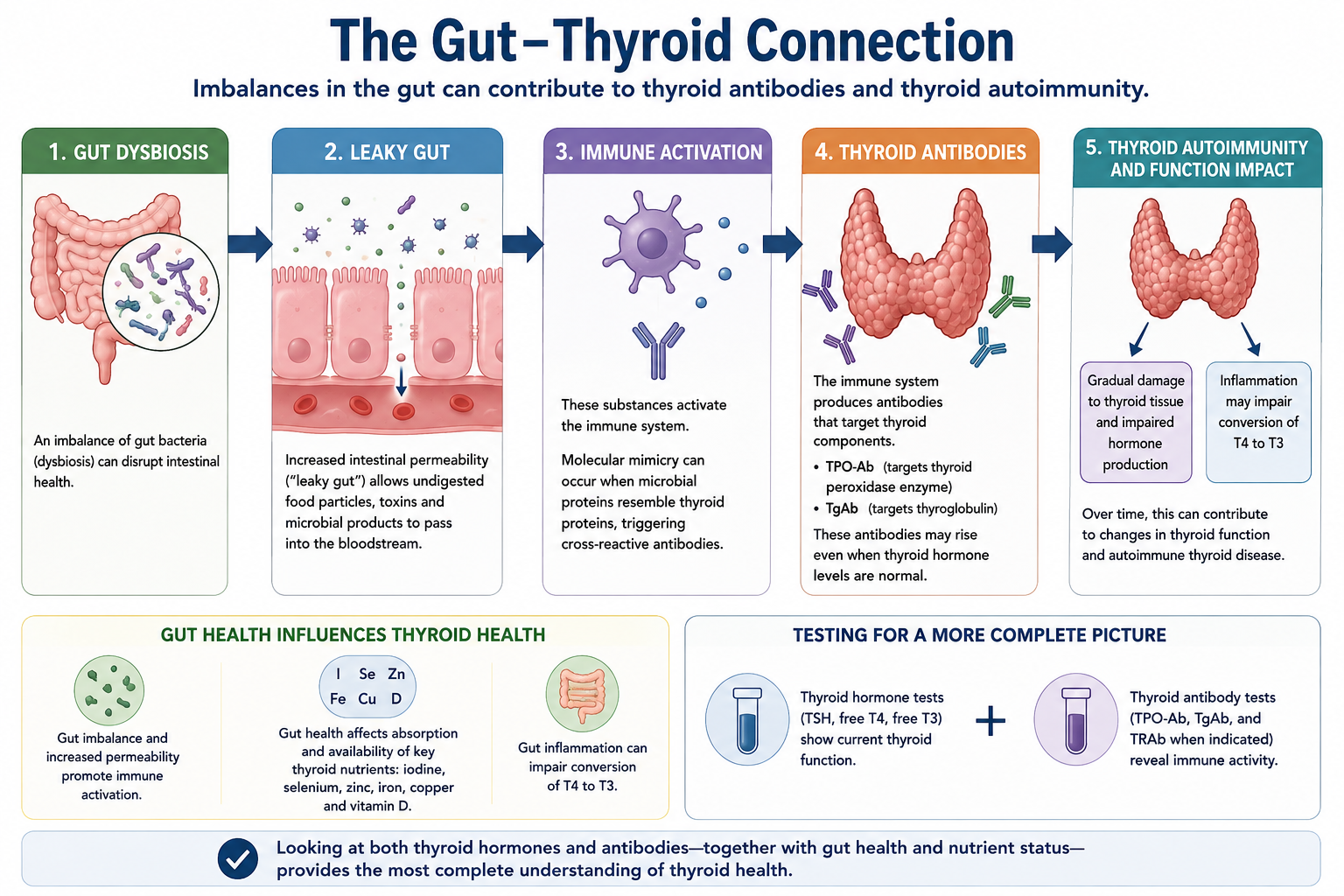
There is a strong connection between gut health, immune regulation, and thyroid function.
Changes in intestinal permeability or the balance of gut bacteria may contribute to immune activation and may also influence the absorption or availability of nutrients important for thyroid health, including iodine, iron, selenium, zinc, copper, and vitamin D.
Gut-related inflammation may additionally interfere with the conversion of T4 into the more active T3 hormone.
For this reason, thyroid antibodies may be most informative when considered alongside thyroid hormones, nutritional status, gut health, and changes in these markers over time rather than viewed as an isolated test result.
CLICK HERE to learn more about Thyroid autoimmunity and gut health.