


Explore how creatine enhances energy production, supports muscle performance, and may benefit brain function, with insights on dietary sources and supplementation.
Creatine is a natural substance that helps the body produce energy quickly. It is produced in the liver, kidneys, and pancreas, as well as in muscle, where most of the body's creatine is stored.
Some creatine is converted into phosphocreatine, which acts like a readily available energy reserve that helps the body rebuild ATP—the energy cells use to do their work. Creatine is especially important in tissues that need a lot of energy, including the muscles and brain.
Creatine also comes from food, especially meat and fish. A typical diet containing animal foods may provide about 1–2 grams per day, while plant foods contain very little creatine. For this reason, vegetarians and especially vegans tend to have lower creatine stores in their muscles. Women may also produce and consume less creatine than men.
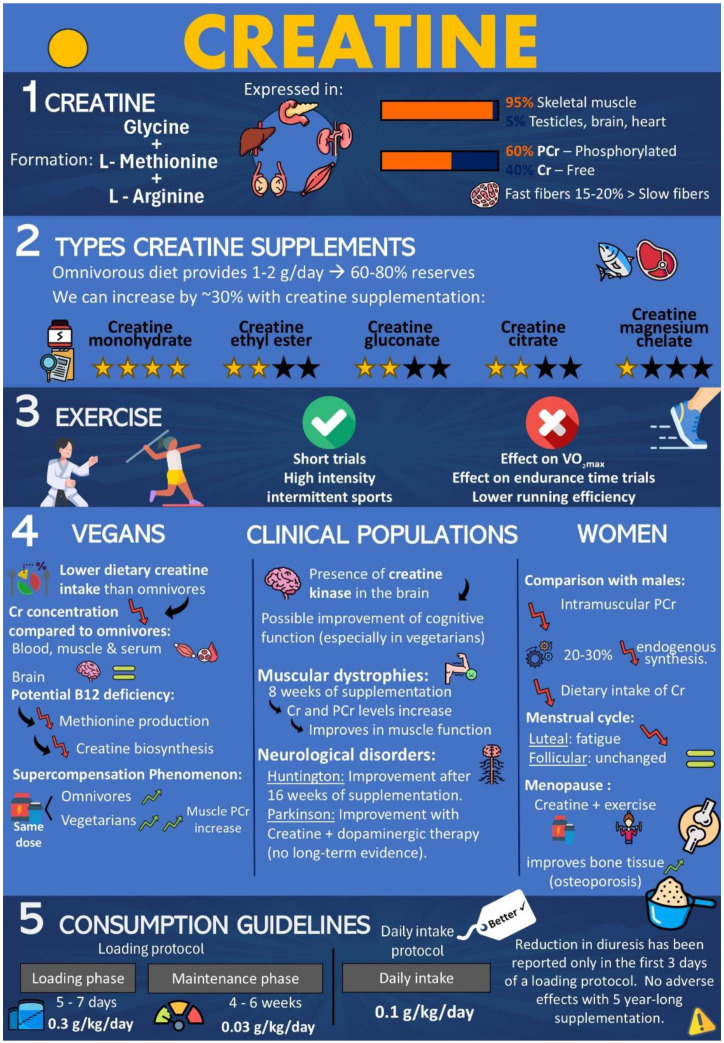
Creatine is best known for supporting muscle strength, power, and recovery, but its benefits may extend further. Because it supports cellular energy production, research suggests that creatine may also help with brain function, memory, mental fatigue, muscle maintenance, and recovery from physical stress.
Research into its benefits for aging and certain health conditions is promising but is still developing.
Of the different forms available, creatine monohydrate is the most extensively studied and best-supported form.
Creatine is naturally made by the body and helps cells quickly replenish energy.
About 95% of the body's creatine is stored in skeletal muscle, but it is also important in the brain and other tissues.
Meat and fish are the main food sources; plant foods contain very little.
Creatine may support muscle performance and recovery as well as brain energy and cognitive function.
Creatine monohydrate has the strongest research support among supplemental forms.
Gutiérrez-Hellín, Jorge et al. “Creatine Supplementation Beyond Athletics: Benefits of Different Types of Creatine for Women, Vegans, and Clinical Populations-A Narrative Review.” Nutrients vol. 17,1 95. 29 Dec. 2024, doi:10.3390/nu17010095 https://creativecommons.org/licenses/by/4.0/
CLICK HERE to learn more about Creatine.