

Learn the causes and signs of malabsorption, plus evaluation methods to restore nutrient balance and support overall health. Learn more today.
Malabsorption occurs when the digestive system cannot properly absorb nutrients from food, including proteins, fats, carbohydrates, vitamins, and minerals. It often occurs alongside poor digestion, when the body cannot break down food well enough to absorb nutrients.
Malabsorption may result from intestinal inflammation or damage, digestive enzyme deficiencies, low stomach acid, imbalances in gut bacteria, infections, genetic factors, or digestive conditions. It can also occur following certain gastrointestinal surgeries.
When the body doesn't absorb nutrients properly, it may develop deficiencies in key vitamins and minerals, including iron, calcium, magnesium, zinc, vitamins A, D, E, K, B12, and folate. Over time, these deficiencies can affect energy levels, immune function, bone health, metabolism, and overall well-being.
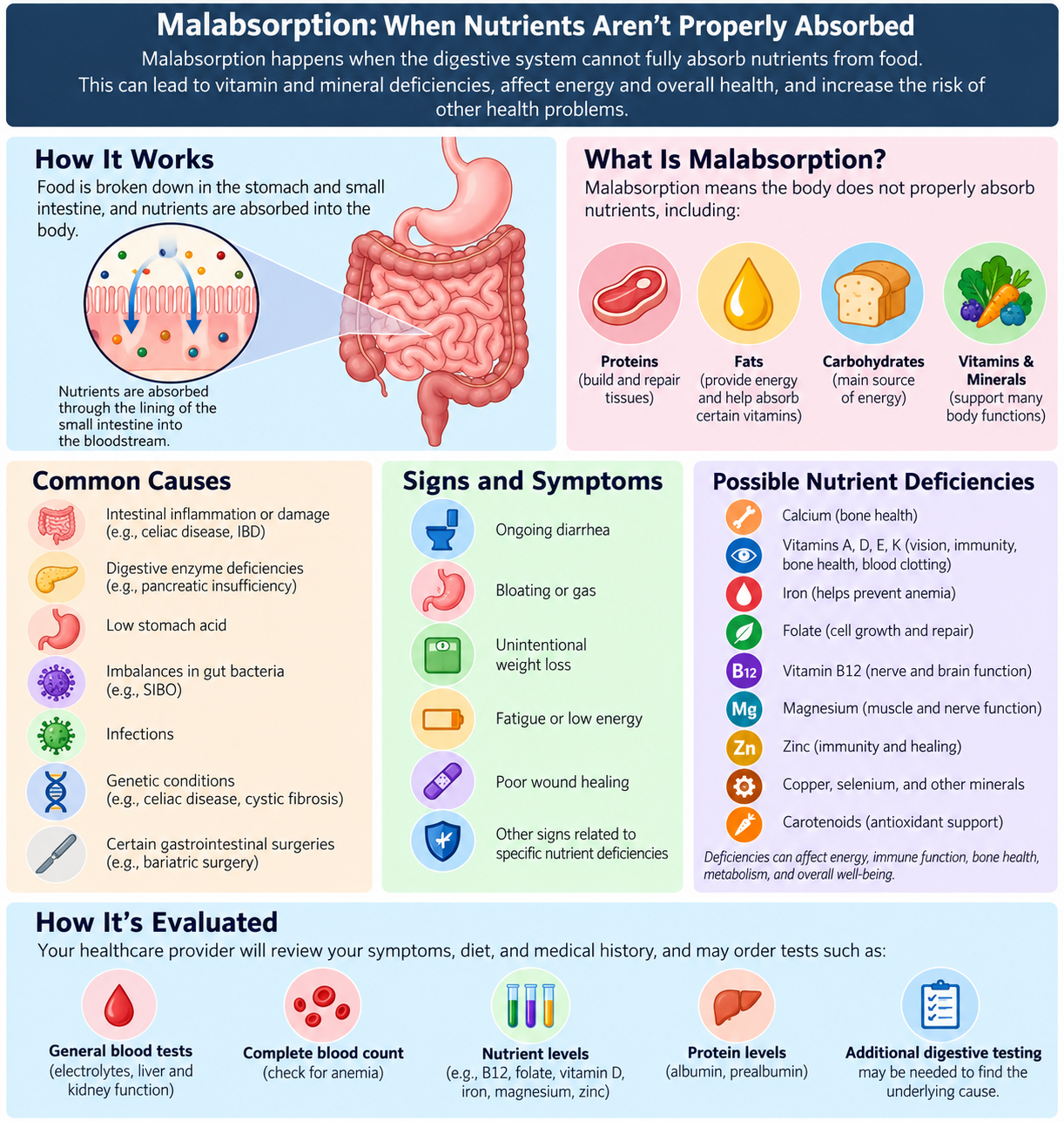
Common signs of malabsorption may include ongoing diarrhea, bloating, unintended weight loss, fatigue, and poor wound healing.
Evaluating malabsorption involves reviewing symptoms, dietary habits, medical history, and laboratory results.
Blood tests may assess nutritional status, protein levels, anemia, liver and kidney function, and important vitamins and minerals.
Additional digestive testing may be needed to identify the underlying cause. Early identification and appropriate care can help restore nutrient balance, support digestive function, and reduce the risk of long-term health complications.
CLICK HERE to learn more about Clues to evaluating malabsorption