


Discover the vital role of blood calcium in body functions, its impact on bone health, and why normal levels don't guarantee strong bones. Learn more now.
Calcium is best known for building strong bones and teeth. But this essential mineral does much more. It helps nerves communicate, muscles contract, the heart function properly, and blood clot when needed.
Because calcium supports so many important processes, the body constantly works to keep blood calcium levels stable. However, normal blood calcium doesn't necessarily mean the bones are healthy or that the body is getting enough calcium.
About 98% of the body's calcium is stored in bones, which act as a reserve when the body needs more calcium.
Three major organs and tissues work together to maintain calcium balance:
Several hormones, particularly parathyroid hormone (PTH) and active vitamin D, help coordinate these processes. Together, these systems keep blood calcium within a narrow range.
When dietary calcium intake is too low, the body may compensate by releasing calcium stored in bones into the bloodstream.
This helps protect essential functions, such as nerve signaling and muscle contraction. However, maintaining normal blood calcium this way can come at the expense of bone health.
Over time, increased calcium loss from bones may reduce bone strength.
This is why a normal calcium blood test cannot rule out bone loss or inadequate calcium intake.
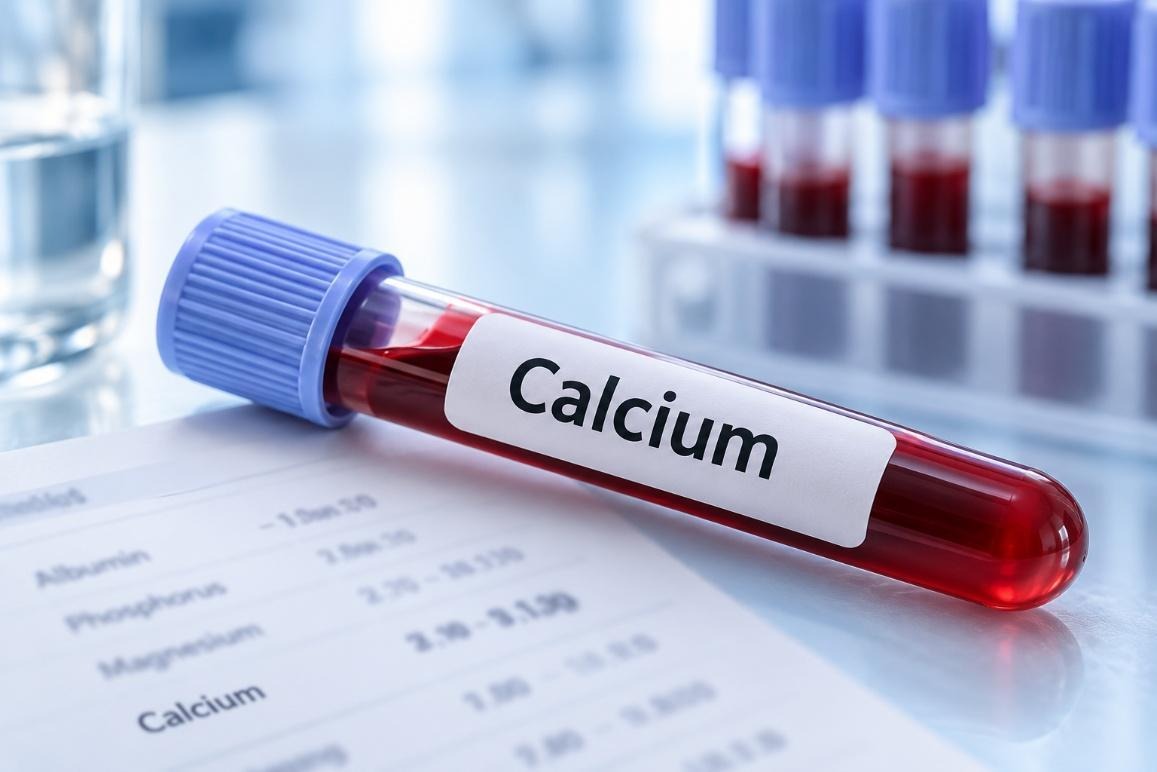
Less than 1% of the body's calcium circulates in the blood. It exists in three forms:
A standard total calcium blood test measures all three forms.
However, changes in albumin levels or blood acidity (pH) can affect calcium measurements without necessarily changing the amount of biologically active calcium.
An ionized calcium test directly measures the active form and may provide a clearer picture when these factors complicate the results.
Even slight changes in blood calcium can reflect how the body is adjusting to maintain balance.
For example, changes in calcium absorption, kidney function, hormone activity, or bone remodeling may influence circulating calcium. Changes in blood proteins or pH can also affect test results.
However, a small change does not automatically mean something is wrong. Calcium results should be considered alongside other blood tests and the person's overall health.
Blood calcium tests can help identify problems with calcium regulation, but they don't tell the whole story about bone health.
The body can maintain normal blood calcium even if it needs to draw calcium from the skeleton.
Understanding calcium levels alongside other markers of mineral metabolism, kidney function, and bone turnover can give a more complete picture of how the body manages this essential mineral.
CLICK HERE to learn more about Calcium regulation