



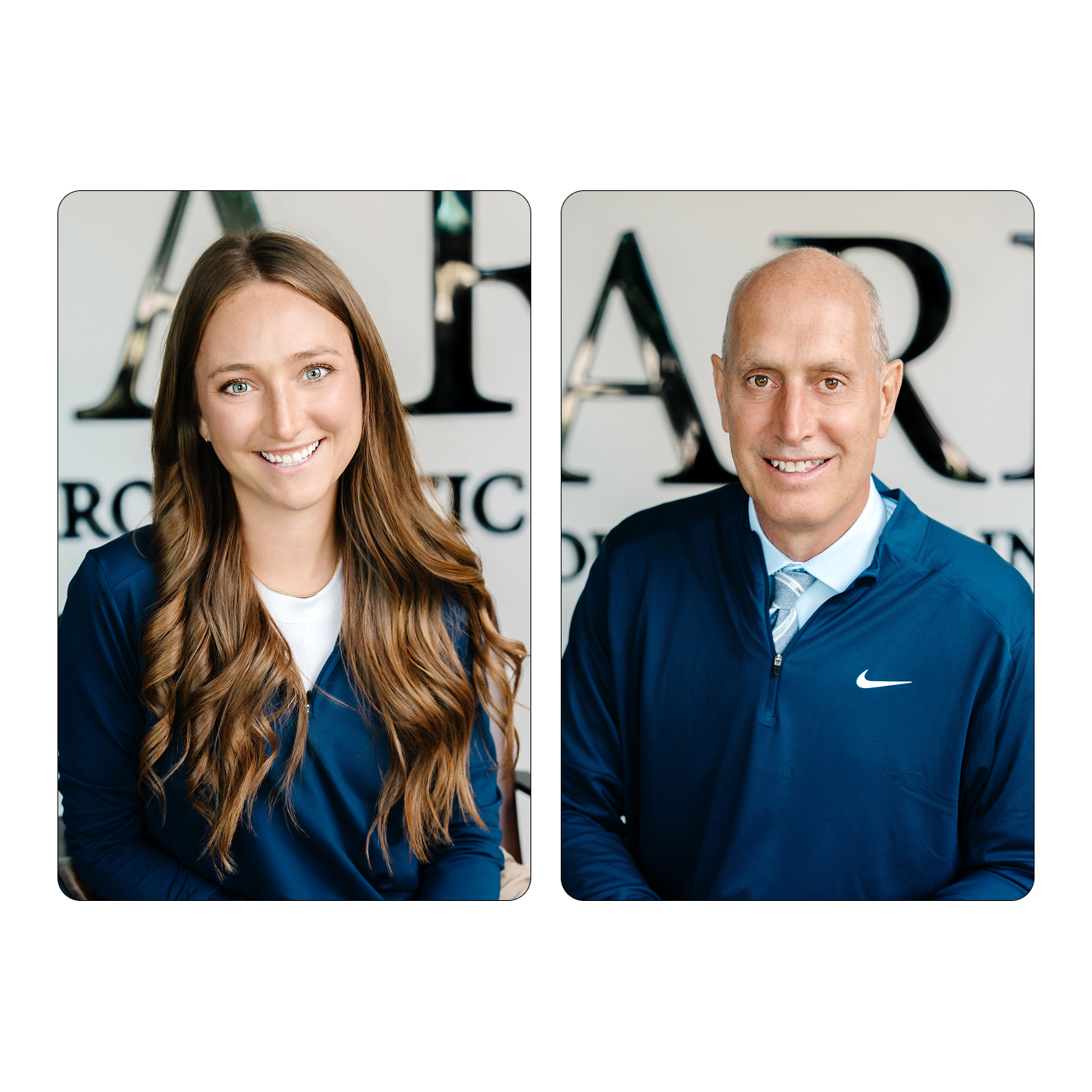
Dr. Wayne Carr, a chiropractor and Functional Medicine doctor with 39 years in practice, and Ashley Curnow, a registered dietitian, work alongside each other at Carr Chiropractic, a Functional Medicine practice in South Dakota.
Before Optimal DX, Dr. Carr’s team ran labs and logged every finding onto a spreadsheet by hand, adding notes and new columns as more testing came in. Dr. Carr described this as a cumbersome, ongoing task that grew larger with every additional data point. When he came across Optimal DX through an email in 2012, he said there wasn’t much hesitation. He recognized quickly that it would benefit the practice and adopted it right away.
With Optimal DX, reviewing labs at Carr Chiropractic is a two-person process. Curnow downloads each patient’s results, prepares the Functional Health Report, and drafts initial recommendations. Then she and Dr. Carr sit down together and go through the findings before finalizing a plan. Both described the report as a built-in second checkpoint, something that occasionally flags a finding either of them might have missed while reviewing on their own. Dr. Carr also praised the platform’s clinical resources and direct access to the Optimal DX team, describing it as a place he’ll go when a case includes something less familiar, a specific hormone marker or lab pattern he wants a second opinion on.
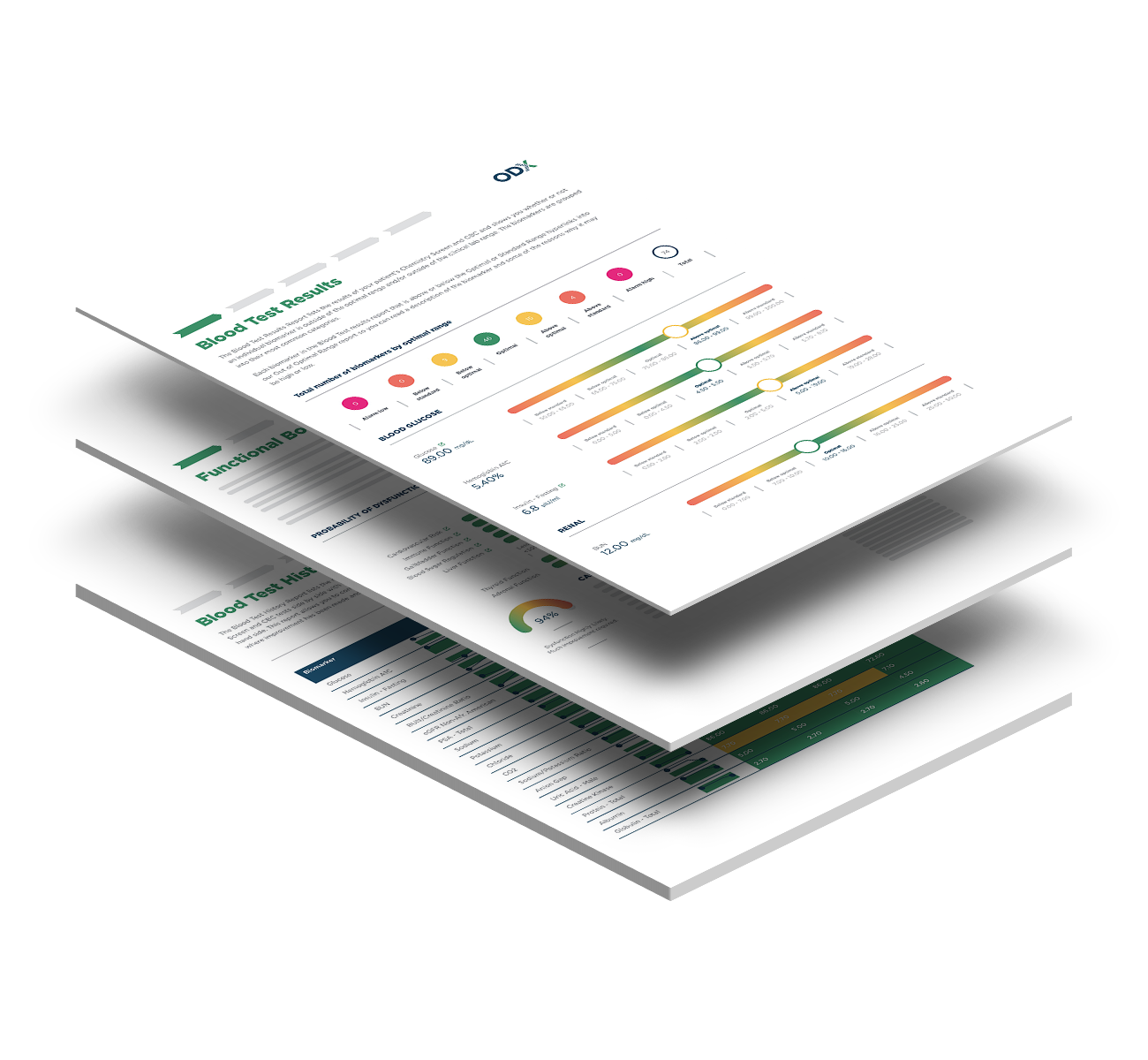
Patients notice a clear difference too. Dr. Carr said patients who’ve been with the practice long enough to remember the old spreadsheet reports now look back at them as confusing by comparison. He also said other practitioners reviewing a shared report are surprised by the depth and clarity, and that the report itself has become an unplanned source of new patients, with people asking for it by name after seeing a family member’s or friend’s copy.
One case that stood out involved a patient in her late teens who had stopped having a menstrual cycle. Lab work run through Optimal DX flagged a significantly elevated prolactin level, a marker Curnow said isn’t one most patients that age are familiar with. Having that specific, documented result gave the practice a clear basis for the conversation and helped support the patient’s referral to an endocrinologist. In a different set of cases, several patients dealing with infertility showed no single marker seriously out of range, but the report’s ability to display several borderline findings at once, including B12, vitamin D, and thyroid markers side by side, helped the practice spot a combined pattern they connected to the patients’ difficulty conceiving.
Both practitioners also described a shift in their own confidence. Dr. Carr said seeing the full picture and the fine detail together, backed by trend graphs and color-coded ranges, makes it hard to miss something important. Curnow said that reviewing enough reports over time has helped her build a stronger sense of what different marker patterns typically mean, deepening her own clinical reasoning in the process.
After the interview, we followed up with Dr. Carr and Curnow to ask an important question: “What would you tell a practitioner who was worried about the cost?” Curnow started with time. When lab results import directly, the practice avoids manually entering and organizing values or working through a PDF, and the time savings are “incredible.” That time goes to evaluating the patient and building a treatment plan. She added that Functional Medicine often means weighing a large amount of information from several labs, and having it organized so patterns and relationships stand out speeds up case evaluation and treatment planning.
The return shows up with patients too. Curnow said the report lets the practice show people what it sees in their results and why it makes each recommendation, which improves the conversation and helps patients engage with their care plan. Patients who finally understand what is happening with their health talk about it, and she said that brings in friends and family for their own evaluations. The report also gives the practice a professional, organized way to communicate with other practitioners, and she listed delivering a higher-value service among the benefits.
"Take care of the people in front of you, and [Optimal DX] does a great job of allowing us to take care of the people in front of us."
For Dr. Carr and Curnow, Optimal DX is now how they review labs and explain results to patients, and it has become a reason new patients come to them.
Optimal DX is free to join. Create your account at optimaldx.com/pricing and pay only for the reports you run.
Transcript of the original recorded conversation between Katie Bishop, RD of Optimal DX, and Dr. Wayne Carr and Ashley Curnow, RD of Carr Chiropractic.
Katie Bishop, RD:
Welcome. Thank you both for meeting with me and agreeing to share your Optimal DX story journey. And, so to get started, I would love if both of you could take turns and just introduce yourselves, let us know a little bit more about you, and, basically, who I’m talking with today.
Dr. Wayne Carr:
Ashley, you go first.
Ashley Curnow, RD:
Hi. I’m Ashley. I’m a registered dietitian. I’ve been with Carr Chiropractic, our functional medicine practice, for just about seven years. So all I’ve ever done is this type of medicine, and, fortunately, we’ve been able to use this program the whole time that I’ve been in practice as well.
Dr. Wayne Carr:
I’m Dr. Wayne Carr. I’m a chiropractor and functional medicine doctor. I’ve been in practice now for 39 years and bringing functional medicine practice, now probably about 12 years. And since Ashley’s joined us, we’ve definitely ramped that up.
Katie Bishop, RD:
Awesome. Thank you both so much for introducing yourselves. So first things first, how did you first hear about Optimal DX, and what made you decide to try it?
Dr. Wayne Carr:
Well, we were this is before I actually started working here, and we were doing our labs, and then we were putting them on a spreadsheet. We, you know, have the cumbersome duty of putting everything onto a spreadsheet then and evaluating every finding and then putting notes on there and then adding columns as we did additional work.
And then, you know, I think it was just through emails that I saw this, and I don’t think there was really any hesitation when I saw that it was coming, that it would be a good thing for our practice. So we jumped right in and took that opportunity and started using this.
Katie Bishop, RD:
Yeah. And when did you start with Optimal DX?
Dr. Wayne Carr:
That’s a very good question. Definitely longer than more than seven years ago.
Katie Bishop, RD:
Great. Love to hear it. What was getting started like for you? Was it easy or a little confusing, or how did that go?
Dr. Wayne Carr:
I’d say it went very well. I mean, of course, then we had to still enter the data, which was, again, time-consuming. We trained many of our staff to do that for us, and that’s a process in itself and just making sure there’s no errors. So you have the human error in there that we went through that process. But it was still very good. Maybe, Ashley, you can touch on just the fact of how it’s helped with our patient interactions and stuff like that.
Ashley Curnow, RD:
So when I started, Optimal DX still, you still had to manually key in, like, all of the lab values. So, that’s something we’re, you know, we were doing for quite a while, and there were certainly were some opportunities for error like Wayne had mentioned. And so then within the last couple years, you guys brought on the feature where we could import them, which is a fabulous feature that saves us a lot of time. And we realize that when we get labs brought in from a patient and we have to manually type them in, but it saves us so much time. We can just import them from, from whether it’s LabCorp or Access. Those are two typical ones that we use that we’ll import that with.
And so it’s really been able to just save us a lot of time and be able to focus more on the patient interaction and be able to get them that report that it prints out so nicely for them too.
And then that report has been just a game changer as far as patients understanding what’s going on.
It saves us time and a lot of sense too because we say that, you know, we’ll go over the high points here, then you’d have this document to take home and study it. And then once you have more questions, they can do it. Having the history there is, you know, beyond valuable.
I mean, we have many that we have to do two or maybe three reports because we have so many labs in there that we could just reflect back on all those and get that history of what they’ve been doing there.
Katie Bishop, RD:
Yeah. Absolutely. So it sounds like we have a big time-saving component, but also really enjoying just the actual functional health report itself and how that’s been helpful. And so thinking about that and every way that Optimal DX has helped your practice, what would you say is the most meaningful way it’s changed how you work day to day?
Dr. Wayne Carr:
So you can go first.
Ashley Curnow, RD:
Well, I think that this is certainly a good time to bring this up as we’re in, like, more and more of a world of AI where people have kind of the quickness at their fingertips of plugging in a quick question or even plugging in their lab results and getting a printout. And that can still be then very daunting for a person. You’re given all this information and so many explanations as to why those labs could look that way.
So I think that what I enjoy most about it is just that it puts everything in there so cleanly, so kind of concise, and personalized a little bit more of that person without having to read through and dig through so much of why someone’s calcium could be a little bit high. You know, instead of getting 50 reasons where 1% of the time it could be that, you’re getting more of those more realistic and more applicable reasons, and then able to provide that to the patient and that educates them with a little more backing as opposed to just plugging my numbers into ChatGPT and having it spit out something that usually confuses them more. So it’s very concise but helpful for us. And then also from a functional medicine standpoint, we want to empower the patient so that gives them the ability to be educated on those things as well. So it saves you know, it’s a good resource outside of our visit.
Dr. Wayne Carr:
And then in that same sense too, then, you know, we look at the labs. We, you know, we first kinda go through the labs before we even look at the back of the document. We’ll get our thoughts on it.
And then, you know, this might flag something that we would have normally missed. So it gives us that clear kind of a second checkpoint. You know, we got Ashley and then me, then we have that second checkpoint with the software that we can look in there and say, okay. We overlooked this or whatever. So we have a lot of checkpoints that we’re able to prevent any, you know, cases of missing something or that. So it’s very nice to have those flagged.
Katie Bishop, RD:
Yeah. Absolutely. Can you actually think to a specific patient case? And, you know, no names necessary, of course, where you feel like Optimal DX changed the outcome or the conversation that you may have had with this patient?
Ashley Curnow, RD:
So I thought on that, I actually was able to come up with a few different scenarios. And, when I was looking at those patients again today, reflecting on that, you know, I think one group we see is a very wide range of patients, ranging from autoimmune conditions to just overall health and wellness to hormone imbalances and fertility. So there’s just such a wide array of patients, and kind of one subset of those is I would say like infertility patients oftentimes fall in their own group because by the time they arrive to our office, they’ve had most physical evaluations done. So certainly there could be instances like PCOS or endometriosis already diagnosed, but some of these people have unexplained infertility.
So in somebody like that who’s generally pretty healthy but some mechanism in their body is not getting them to their goal, that report can be really nice because it shows how maybe something isn’t significantly wrong, but there’s an accumulation of a few things that are just a little bit above or below optimal. So we’ve had, you know, the privilege of getting to help people start families over the last couple of years, and there’s just there’s a couple women in particular that didn’t have anything significantly, like, complete right or left, way of the spectrum, but had that accumulation of some B12 needs, some vitamin D needs, some maybe suboptimal thyroid levels.
And they were able to see how all of that can maybe add up to not getting them to their goal of having a baby. Then on that complete opposite side of, like, where there has been scenarios where something has been really, really off, we’ve had two patients, both a man and a woman, with prolactinomas. So a young woman came in and wasn’t getting her menstrual cycle, had had it for a couple years, then stopped getting it. And I think she was only about 18 when she had came in.
And we did some labs and evaluated things and had ran a prolactin level, and I’d have to look back to see, but her prolactin was extremely, extremely high. Now prolactin’s not necessarily a hormone that you at 18 are very familiar with, so being able to for us to know, see that and know that information, but then be able to provide that report to her too to reiterate the things that we were discussing at this prolactin level is likely the reason that you’re not having a menstrual cycle and being able to help us get her to help us encourage to get her to the right place because she certainly needed to see an endocrinologist from there. You know, that was good for her to have that data to reflect on, before we got her to that endocrinologist.
Katie Bishop, RD:
Yeah. Absolutely. Thanks for sharing that. Dr. Carr, anything come to mind for you?
Dr. Wayne Carr:
Well, you know, those are good cases. Well, Ashley and I went through those and talked about that. But, you know, hemochromatosis, another condition there that we often find on there that we, then do the genetic testing, and we’ve found a handful of those. But also ones that weren’t necessarily registered hemochromatosis and just had a high ferritin, and then we could look at the inflammatory markers and know if there’s a tie there. It’s been very good.
You know, Hashimoto’s, a big one there to look at the thyroid and work from there. Low iron, even, you know, more high iron, like we said before, good things there, tracking people’s cholesterol. Those things have been really good for us to be able to do. And then also, you know, we have that capability of contacting ODX and talking to you guys and seeing, you know, we’re seeing this and what do you see. You guys are able to go into the software and look at our lab work and give us interpretation from there, which has been helpful, and also going into the questions that are commonly asked too to give us good information of where we need to go.
Katie Bishop, RD:
Yeah. That’s great. So since you started implementing ODX in the practice, have your patients responded differently to their lab results or how they sort of maybe even digest the information that you give them?
Dr. Wayne Carr:
Well, I’ll reflect back on when we were doing it on the spreadsheet before that, certainly, it was you know, I occasionally will have a patient come in that was in several years ago, and we’ll pull those up, and we’ll say, man, it looks confusing to us. So this has clearly given them better information there. Some people are you know, will come in every time with their blood work and have questions written on it or wondering other people, of course, you know, you give it to them, they never look at it. But certainly, we wanna appeal to everyone. Some people wanna hear it. Some people wanna see it.
But, ultimately, it always rolls around to, okay. Let’s go back and look at that and show you where that’s at. So, our patients have found it remarkable. Other providers that, you know, we’ll give it to the patient and share with their providers, and they’ll go, man, I’ve never seen anything like this before. This is really good. And we get very good comments from them too.
Katie Bishop, RD:
Yeah. Absolutely. Ashley, did you wanna add anything to that as well?
Ashley Curnow, RD:
Well, I’ve kinda like I said at the beginning, I’ve only ever used this, but I have a lot of patients who will come in, and, they’ll request, like, we’d like to have you do our labs because it’s so much more in-depth. Certainly, that does fall back on us of selecting which tests to do, but a lot of times what we’re referring to is simply just getting that report, because it does give them that explanation of why those things are off a little bit. So in with having patients bring in external lab reports and making comments of how helpful their report is, certainly, doing it a different way would not provide them that same education and resources that the ODX report does.
Katie Bishop, RD:
Sure. Absolutely. Now on the side of both of you as practitioners well, I know, actually, you’re saying you’ve only used ODX, but, would you say that both of you maybe feel more confident in your clinical recommendations now than before? And can you describe that difference?
Dr. Wayne Carr:
Well, certainly, you know, the confidence is way up because, again, we’ve been able to look at the big picture and a small picture because it’s all right there. So that’s given us that ability to just summarize it really well. It’s all right there in front of us. It’s impossible to miss anything when you look at the graphs and go from there and even go back to the history and you got the colors in there that give us that. So we’re very confident what we’re seeing, and then able to convey that confidence to the patient that you can see it right here and where it’s trending or what it’s doing, that it’s very good for that. And then, you know, Ashley and I will spend a lot of time just kind of going through it.
Our typical procedure is as we get the labs, Ashley will download it, print it off, do a review of findings on it, create that document, then create recommendations, and then her and I sit down and go through those.
Always nice to have more eyes on things, and we’ll discuss, you know, what do we think of this, what do we think of that, and it helps us, you know, really hone in on that and let us and also flags those things that, okay, we’re not gonna deal with the, you know, let’s say their blood sugar is bad and they’re and and they’re having a little bit of liver problems. We’re gonna say, okay. Let’s work with that liver problem first, see if that’ll help clear out some things, and then we’ll go back to maybe adressing the the blood sugar a little deeper or something. So it gives us that clear outline with that too.
Katie Bishop, RD:
Yeah. Definitely. And, Ashley, any thoughts?
Ashley Curnow, RD:
Yeah. I would say, certainly, confidence level is a lot higher because after doing you know, won’t say a specific number of them, but after doing several, you start to almost have it memorized as far as what the report is gonna tell you if uric acid is a little bit elevated, what the causes are of those are. So it helps you as a practitioner just learn a little bit more reasoning behind why some of those values may be higher, low, what could be causing those. Because, obviously, we’re always trying to look for the root cause of that, not just fixating on that the level is off, but why.
And so you do learn that the more and more and more you go through. So that’s very, very helpful as well. So just from an education for yourself. Plus there’s times when it might be maybe it’s an odd thing that we’re running and we’re not as familiar with it, then we can go in and look at, you know, what would be some of the causes as to why it’s high, why it’s low, is there medications that can be impacting that and that as well.
And then, similar to kinda, like, what Wayne had started to mention there at the end, sometimes there can be multiple things often need to be addressed, and one can be the causation of some of the other things, like the blood sugar. But if the thyroid is also off, then maybe that tells us we need to focus a little bit more on that thyroid, and that may also correct or improve the blood sugar a little bit. And then lastly, this is something that we just should have maybe mentioned prior to is that, it’s we learn from it, but then also the patients can see that there is a different range. You know, the average doesn’t fit everybody sometimes. And so since there is that optimal range, we’re able to reflect on that and try to get people into more of that optimal range, and that can sometimes explain maybe why someone’s being told, you know, my labs look good, but I don’t feel well. It’s because that average doesn’t always fit everybody. So you may not feel good when your TSH is at 3.5 even though the average range tells you it’s okay.
Katie Bishop, RD:
Yeah. Absolutely.
Dr. Wayne Carr:
And then also with that, just real quick, is with again, back to the trends, we can look and say that, you know, every other test, the number was this, and all of a sudden it pops up to here, and that gives us an alert that something’s going on there.
And then vice versa, we can also have this document that shows people, and there’s a nice you know, where we have the previous history of things, it has a nice graph to say things are going the right direction for us too. So that’s really good to have.
Katie Bishop, RD:
Yeah. Totally. So switching gears a little bit. If you were to describe Optimal DX to a colleague who maybe never heard of it, what sort of things would you say?
Dr. Wayne Carr:
Ashley, you got something?
Ashley Curnow, RD:
Well, I would say kind of like what I just mentioned of having that the more of a functional medicine range is a very big difference between just getting a printed out lab report when you order some labs and they go to your local laboratory. So being able to look at it truly, truly from a functional medicine perspective is something that, like, if a colleague was asking us, what do we do with labs or how do we interpret them? Definitely, I would tell them that that sets, you know, that that sets everything apart because it is giving you that you’re not having to then look at the lab values, and more in-depth and kinda almost supply your own ranges. Certainly, we all wanna be individualized and keep autonomy, but you can still look at that and see, okay. Well, generally speaking, this is gonna be the optimal range. I may, you know, flex that a little bit, but that’s how, to me, it really is quite different from something else.
And then just I would tell people it’s a fantastic reporting tool. So number one, it’s great to have for you for your records. I mean, it’s basically a great EHR because you have that data that can carry on from there. Secondly, it’s a great you know, it’s a medical assistant because it’s gonna help you determine what’s going on with the patient and what you need to do from there. And then lastly, it’s a, you know, it’s a practice marketing tool because if that’s sitting out there, your name’s on there, they’ll share that with other people, and they say, wow. This is really good. I wanna do that. And, we hear that over and over again that people say, you know, my I did this with my daughter. I wanna do it, or I my friend did this. I saw it. I wanna see that. And that’s what we get a lot of calls on.
Katie Bishop, RD:
Yeah. Absolutely. We definitely meet with a lot of people who said that they get a lot of new clients coming to them because they want that report. We’ve also had potential new clients come to us and say, hey, someone brought this report to me, and they want me to do it with them. And I don’t have ODX, so here I am. So, yeah, I can definitely see that.
Is there anything else you would like to add that you think would be important for other people to hear who maybe they aren’t sure about how to use ODX or, you know, how it fits into their practice or, you know, any advice or words of wisdom?
Dr. Wayne Carr:
Well, I would first say it’s super easy. I mean, it’s just it’s super, super easy, especially if you use the labs that you can automatically download into there. Second, great company to work with. The focus is on patient care, getting the patient better. Certainly, when you do good things like that, you’re gonna see more patients and all those things. But the key thing is to take care of the people in front of you, and this does a great job of allowing us to take care of the people in front of us. Ashley?
Ashley Curnow, RD:
Yeah. I would just echo the same thing you said.
Katie Bishop, RD:
Love that. That’s great words of wisdom. Really appreciate you sharing that. And yeah. So that’s about it. Thank you both so much for taking some time out of your day for talking with me about this. We’re really excited to, you know, put your story out there, and, hopefully, you can inspire other users of the platform to just really dive in and make the most of it.


